



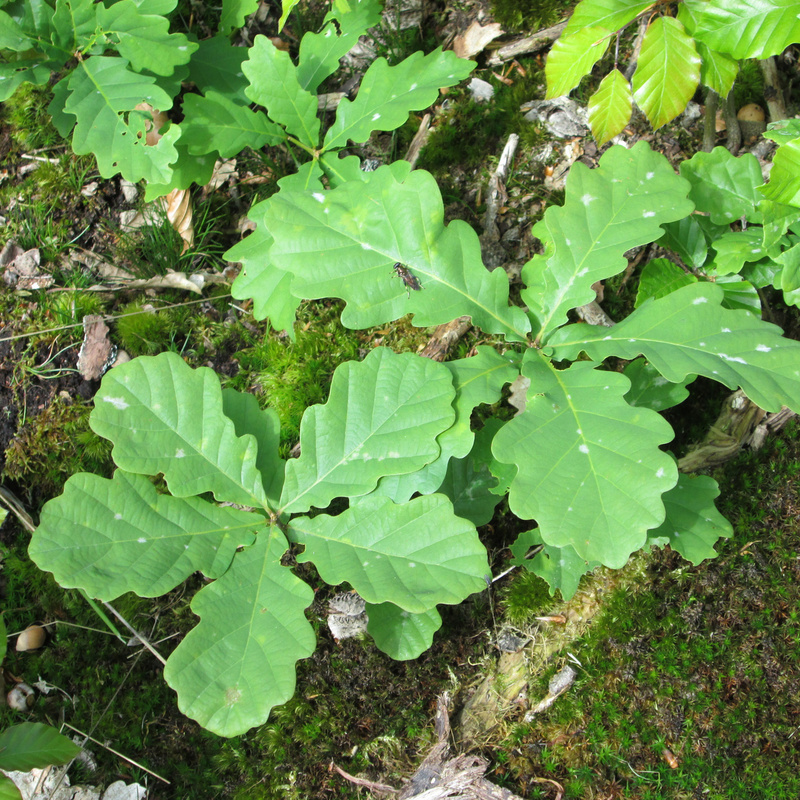
In spring, trees are planted in the forest if there is not enough natural regeneration. The trees must be in the ground before they sprout. The foresters from the district forestry department plan exactly where to plant and which trees to put in the ground. In most cases, however, it is the climate-stable oak.
After planting, it's a case of waiting and hoping for rain. This spring has made the forester's heart happy. "The rainfall has given the planted trees the best conditions to grow," reports Dr. Simon Boden, Head of the Forestry Department, and continues: "We are dependent on the rain, we can't usually water. If there is a lack of water in the forest, then it is also scarce elsewhere." For this reason, very small trees with a size of 30 to 50 centimetres are planted in the forest. The small trees have a relatively large root in relation to the shoot and therefore respond better to replanting. However, the small size also has a disadvantage: now that everything is growing, the small trees disappear under a carpet of brambles, grass, ferns and raspberries. So the wait is over for now: the trees need sunlight to grow, otherwise they will die. It's high time to give the young trees space and light. In the first year, the foresters clear each newly planted forest area of brambles and grasses two to three times. Later, when the trees grow larger, one or two passes a year are sufficient.
But that is not the end of the story. The foresters and forest managers are already envisioning the forest that could be standing here in 30 to 50 years, and the trees will be really thick in 100 to 150 years. In order to establish a climate-stable mixed forest, it is also necessary to look at the other tree species growing in the area: the trees that have not been planted but have reproduced naturally. Species that are less climate-stable and threaten to overgrow the oak are cut back. Other rare or climate-stable tree species such as wild service tree, field maple or yew are integrated into the forest.
Only after several years of intensive maintenance will the area be left to its own devices for some time. The fruits of this work can then be admired by the next generation of forest visitors.