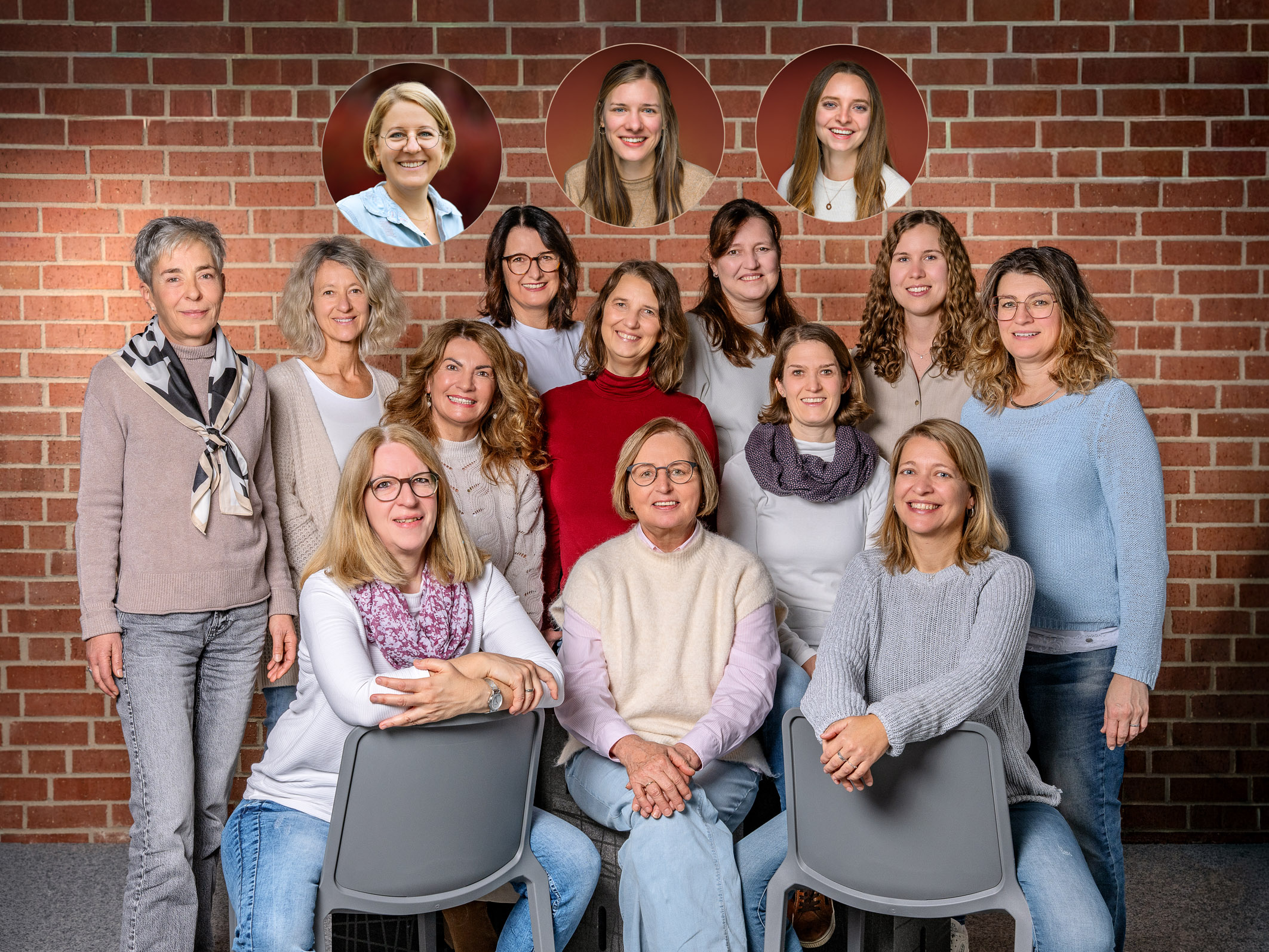




Not all young people are able to grow up with their biological parents permanently. Foster families offer them security and stability. Taking in a foster child or teenager is a responsible, rewarding, and at the same time challenging task.
The Foster Care Service is looking for dedicated individuals who are willing to provide young people with a home—whether temporarily, for an extended period, or permanently.
Whether you’re a couple—married or unmarried—a same-sex couple, a family with or without children of your own, or a single person: what matters most is openness and a willingness to support a child or teenager on their life’s journey.
Are you a potential foster family?
Are you parents whose child lives or will live with a foster family?
Are you a child or teenager with questions about “living in a foster family”?
We’re happy to answer all your questions and look forward to hearing from you.
Becoming or Being a Foster Parent
What does it mean to become or be a foster parent?
Are you thinking about taking in a foster child and/or a teenager? Perhaps you’re wondering: Is this a good fit for our family? Can we handle it? What kind of support will we receive?
As foster parents, you provide a young person with security, support, and stable relationships. At the same time, these young people bring their own stories, experiences, and sometimes special challenges with them.
We’ll be there for you from the very beginning—from the first no-obligation informational meeting, through the preparation process, all the way to welcoming a child and/or teenager into your home. We’ll also be on hand to offer guidance in your day-to-day life. You’ll be assigned a dedicated contact person, have regular meetings, access training opportunities, and receive support in challenging situations.
What is on-call care?
On-call care is a special form of "educational assistance" and means spontaneously and temporarily taking a child into your own family for a few days, weeks or even months in a crisis situation.
There are many reasons why the youth welfare office has to place a child in a standby foster family. These are often situations in which the biological parents are unable to care for the child due to high levels of stress, illness or a crisis.
During this time, we clarify the extent to which the parents can take over the care of the child again or whether other solutions need to be found.
Contact with the biological parents or previous caregivers is maintained during this time and is supervised by the youth welfare office. The structure and frequency are agreed with those involved and generally take place once a week to maintain existing relationships.
We are primarily looking for families for: Infants, toddlers as well as school children; children with and without disabilities; with migration or refugee backgrounds and children with special behaviors.
What should you bring with you?
In principle, couples (married, unmarried, same-sex) or single people can become foster carers. It is not important whether you have children of your own. What is important is
- Enjoyment of living with children
- Ability to offer a child in a crisis situation a safe home, peace and quiet and everyday life
- The willingness to spontaneously take in a child, to accompany it during its stay and to "let it go" again after clarifying its future prospects
- show tolerance and understanding for the child and their parents of origin
- Supporting the child in contact with the biological parents
- Stamina and the ability to deal with conflicts flexibly
- Stable personal and financial situation
- Willingness to cooperate with the youth welfare office
- Space for the child (a room of their own is not essential)
- own mobility (car or good transport connections)
How do I become a foster family?
Becoming a foster family is a decision-making process. We are happy to support and guide you through it.
If you are interested in working as an on-call foster carer, you are cordially invited to a non-binding information meeting at the foster children's service.
This application process also includes an exciting and compact seminar in which you will be prepared for the various topics and tasks as a foster parent.
Once you have successfully completed the preparation process, you can give children a temporary home.
We will take your family situation into consideration in close consultation with you.
What does the foster care service offer you?
- initial, non-binding information on the phone
- Personal information meetings and advice
- Good preparation and training
- Joint development of a "profile" (age range, topics...) that suits you and your family
- professional advice and support during a placement
- stimulating exchange meetings with other on-call foster families
- interesting training courses
- Care allowance for occupancy according to the fixed rates of the district
Have we piqued your interest?
We look forward to receiving your call or email.
What is full-time care?
Full-time foster care is a special form of educational assistance and means taking in a child who is temporarily or permanently unable to live with their biological parents.
Foster families are sought for children for a variety of reasons. These are often difficult life situations in which the biological parents are no longer able to provide adequate care for their child due to their own high levels of stress (e.g. mental illness, addiction). It is often not foreseeable whether the parents will overcome this difficult time and the child can return to them. Therefore, when a child is taken into full-time care, it is often not possible to predict whether the child will remain in the foster family for a certain period of time or permanently. We also look for foster families for children and young people with physical or mental disabilities as well as children with a migration background and their own history of flight.
Contact with the biological parents or previous caregivers is maintained during this time. The structure and frequency varies and usually takes place at fixed intervals in order to maintain existing relationships.
Foster children bring their previous history with them to the foster family. Foster parents have the important task of providing the child with a sense of security and accepting their personality and sometimes special behaviors.
In order to be able to take a child into care, foster parents must be willing to cooperate with the youth welfare office and the family of origin.
What should you bring with you?
In principle, couples (married, unmarried, same-sex) or single people can become foster carers. It is not important whether you have children of your own. What is important is
- Enjoying living with children
- Offering a child a home, peace and quiet and a daily routine during a difficult time
- Show tolerance and understanding for the child and its parents of origin
- stamina and the ability to deal flexibly with conflict situations
- a stable personal and financial life situation
- Sufficient living conditions and enough space for a child
- support for the child in regular contact with the biological parents
- a willingness to cooperate with the youth welfare office
How do I become a foster family?
Becoming a foster family is a decision-making process. We are happy to support and accompany you.
If you are interested in working as a full-time foster family, you are cordially invited to a non-binding information meeting at the foster children's service.
This application process also includes an exciting and compact seminar in which you will be prepared for the various topics and tasks involved in being a foster parent.
Once you have successfully completed the preparation process, you will be able to give a home to children who are unable to live with their family of origin for a certain period of time or permanently.
In close consultation with you, we always take your family situation into consideration during the placement process. It is important to us that the child fits in well with your family and that you and your family fit in well with the child.
What does the foster care service offer you?
- intensive support during the placement
- Professional advice throughout the entire fostering relationship
- Support in cooperating with the parents of origin
- interesting training courses
- contacts with other foster parents
- Foster care allowance according to the fixed rates of the district
Have we aroused your interest?
We look forward to receiving your call or email.
What does caring for relatives/network mean?
Are there parents in your circle of relatives or friends who are unable to take sufficient care of their child? Have you already taken this child in or are you considering offering the child a home?
These cases are referred to as kinship and network care.
If you are related to the child by blood or marriage up to the 3rd degree (i.e. you are a (great-)grandparent, sibling, aunt, uncle, niece or nephew), you do not need official permission to take the child in permanently. This is your private decision and is considered intra-family help.
More distant relatives or acquaintances require a care permit from a period of 8 weeks, which is issued by the foster children's service.
In addition to these private fostering relationships, there are also "official" fostering relationships. Here you are in regular contact with the Youth Welfare Office and receive advice and financial support.
How do I become an "official" foster family?
To become a kinship/network foster family, the legal guardians of the child you wish to take in or have already taken in must submit an application for "educational assistance" to the General Social Service of the Youth Welfare Office.
The Youth Welfare Office then commissions us, the Foster Children's Service, to check you as an official foster family. The Youth Welfare Office must ensure that a child who does not live with their parents is well cared for.
We will get to know you and talk to you about your ideas and visions of how you can support the child. Various documents must also be submitted.
What requirements should you fulfill?
As an official foster family, you are providing public assistance for a child. This means that we require a willingness to cooperate with the youth welfare office, other educational professionals and the child's biological parents in order for the fostering relationship to succeed. You should also have sufficient time and space and offer the child a trusting and caring environment.
What does the foster care service offer you?
- Advice in the process of deciding for or against taking in a child from your environment on a permanent basis
- Support with parenting issues or other topics that arise during the fostering relationship
- If necessary, support with additional assistance for you or the child
- Assistance in cooperating with other professionals from the therapeutic, medical or educational field
- Support in working with the biological parents
- Interesting training courses and discussion groups
- Contact with other foster parents
- Foster care allowance according to the fixed rates of the district
Have we sparked your interest or do you have any further questions?
We look forward to receiving your call or e-mail.
Host families take unaccompanied refugee minors into their family. The foster children's service is looking for families, cohabiting couples or individuals who are willing to take in these children and young people who have fled war and crisis zones without their parents. The majority of them are between 14 and 17 years old. Some of these children and young people have lost their relatives in the war or while fleeing, or they have been sent to Europe alone by their families. They need support and guidance as well as people who look after them with understanding and provide them with assistance.
What is a respite family?
A respite family supports an existing foster family by temporarily taking responsibility for a foster child or adolescent. They care for the young person on an hourly basis, on individual days, on weekends, or even during school breaks, thereby giving the foster family some breathing room to recharge.
For the child and/or adolescent, the respite family provides an additional, reliable caregiver and the opportunity to gain new experiences in a different family setting. This supplementary support helps make daily life more stable and relaxed for everyone involved.
What do you need to offer?
In general, couples (married, unmarried, same-sex) or single individuals can offer respite care. It doesn’t matter whether you have children of your own. What’s important is:
- A love of working with young people
- Tolerance and understanding toward young people
- Perseverance and the ability to handle conflict situations flexibly
- Availability
How do you become a respite family?
If you can imagine helping to relieve the burden on a foster family, we’d be happy to offer you an initial, no-obligation informational meeting.
We’ll take your family situation into account in close consultation with you.
What does the foster care service offer you?
- Initial, no-obligation information over the phone
- In-person informational sessions and counseling
- Working together to determine which “profile” (age range, specific needs, etc.) is a good fit for you and your family
- Interesting training sessions, events, and networking meetings
- Financial support upon agreement
Family of Origin
What does it mean to place my child in a foster family?
If your child is living with a foster family—whether temporarily or permanently—this often brings worries, questions, and uncertainties.
Your child remains your child. Even while they are in foster care, you have rights and will be involved in important decisions as much as possible. Contact with your child is arranged on a case-by-case basis and structured with the young person’s best interests in mind.
We’ll advise you on your options, support you during this time, and work with you to explore opportunities for your child. Our goal is to develop sustainable solutions and to responsibly facilitate contact between you and your child.
Do you have any questions, concerns, or requests?
We’re here for you and look forward to your call or email.
Foster child and teenager
What does it mean to live in a foster family?
Maybe you're living with a foster family or will be moving in with one soon.
This can raise a lot of questions: How long will I stay there? Can I see my parents? Who will listen to me?
You have rights. Your opinion matters. You have the right to say what’s important to you and what’s on your mind.
If you have concerns or feel something is unfair, you can reach out to us.
We’re here for you—we’ll listen to you and support you so that you can feel safe and thrive in your foster family.
Do you have any questions, concerns, or requests?
Feel free to reach out—we look forward to your message or call.