



Handout on the feasibility of flow heat pumps
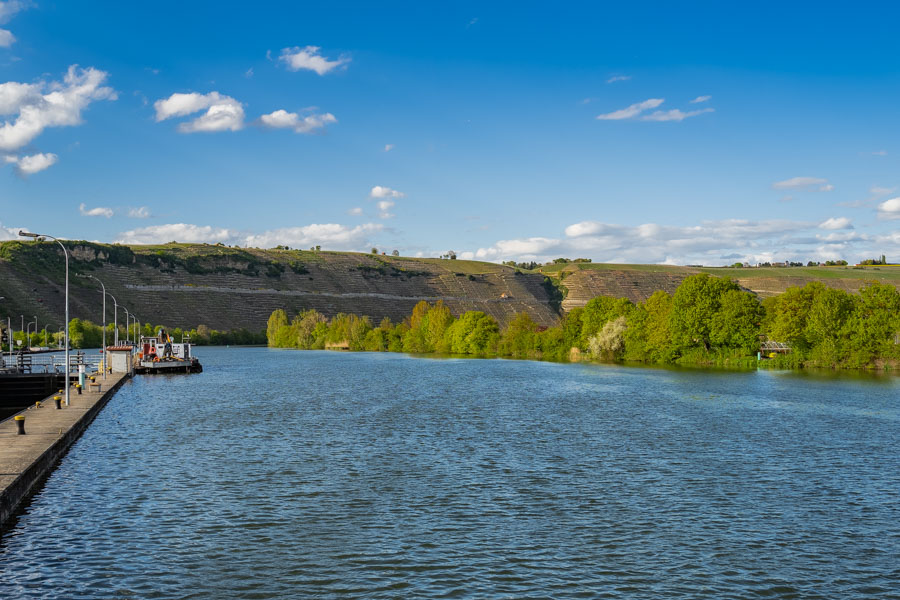
The district of Ludwigsburg is developing a handout on the use of river heat pumps. It is intended to enable local stakeholders to quickly assess the feasibility of river heat pump projects. Three topics are dealt with in depth:
- Approval and water law: protected areas, water abstraction, legal framework conditions
- Technical implementation: requirements for water temperature, flow rate and grid connection
- Economic efficiency and integration: Combination with heating networks and other energy sources
This information is presented in clear maps that graphically show which river sections are suitable and which are not. Practical tips are provided to help municipal companies and energy suppliers with implementation. The handout is an aid for local authorities in the implementation of municipal heat planning.
Do you have any questions or suggestions about the guide? Please contact us here.
Project data
Project duration: February 2026 - November 2026
Project partners: Ludwigsburg district, Forschungsstelle für Energiewirtschaft e. V., Energieagentur Kreis Ludwigsburg LEA e.V.
Target group: Municipalities, municipal utilities and energy suppliers, companies located on rivers
Milestones:
- February 2026 - start of development
- July 2026 - Meeting with stakeholders to fine-tune the content
- November 2026 - Publication and final event
FAQ Flow heat pump
What is a flow heat pump?
River heat pumps use the thermal energy from a body of water to provide heating. A heat exchanger extracts heat from the river water and raises it to a usable temperature level. River heat pumps work in exactly the same way as the widely used air-to-water heat pumps familiar from buildings, except that they use river water rather than outside air as the heat source. The rivers are hardly cooled at all.
What is the advantage of flow heat pumps compared to other heating technologies?
A major advantage of flow heat pumps is their high energy efficiency. Compared to air-to-water heat pumps, they benefit from the more even temperatures of the water, which means less energy is required to generate heat. Compared to oil and gas heating systems, flow heat pumps are significantly more climate-friendly because they do not burn fossil fuels, which means that no CO₂ is produced during operation.
Why is the district of Ludwigsburg working intensively on this topic?
In order to become climate-neutral, the fossil heating systems in the district must be replaced step by step with climate-neutral heating systems. Due to the many rivers that flow through the district of Ludwigsburg (including the Neckar, Enz, Murr, Rems and Bottwar), river heat pumps offer huge potential for advancing decarbonization. The handout provides all the key information and lowers the hurdles for the construction of large river heat pumps.
Guideline for solar systems
The expansion of renewable energies is a key building block for climate protection and a sustainable energy supply. Solar systems can generate large quantities of climate-friendly energy and make an important contribution to supplying households and industry with affordable electricity. In addition to roof surfaces, there is also great potential on open spaces.
At the same time, ground-mounted solar installations can conflict with other uses - such as agriculture, the landscape or nature conservation. Careful consideration of the various interests is therefore required.
The guideline for solar installations helps to identify suitable locations in the district of Ludwigsburg. It shows which land categories are particularly suitable from the district's point of view and contains information on planning as well as an overview of the legal framework.
The document was developed jointly by various departments of the district administration at the beginning of 2026. It serves as a guide for local authorities and project sponsors when planning ground-mounted PV and solar thermal systems. The guideline is not legally binding.
Hydrogen project H2LB
Common direction for a structured transformation
The Ludwigsburg district's "H2LB" project is one of 16 projects funded by the state of Baden-Württemberg as part of the "Regional Hydrogen Concepts" (RWK) program.
The aim of the "H2LB" project was to develop a hydrogen strategy for the district of Ludwigsburg. To this end, local needs and potential for decentralized hydrogen concepts were analyzed. The hydrogen strategy should thus answer the question of where and when a hydrogen supply can be expected or where other supply solutions already need to be designed, planned and implemented today.
The "H2LB" project started on 15.5.2024 and ran for six months. The Karlsruhe Project Management Agency (PTKA) at the Karlsruhe Institute of Technology (KIT) managed the funding program. The district implemented the project in close cooperation with Energieagentur Kreis Ludwigsburg LEA e.V., the Institute for Ergonomics and Technology Management at the University of Stuttgart (IAT) and the city of Ludwigsburg. Other regional players were identified and involved.
Green hydrogen is a key factor for climate protection and a successful energy transition. The prerequisite for a hydrogen economy in Baden-Württemberg is to develop the infrastructure for the production, storage and transportation of hydrogen and hydrogen derivatives. Hydrogen derivatives are chemical compounds that are produced from hydrogen and can be used as energy carriers or chemical base materials. They offer a way of storing, transporting and using hydrogen in a form that is more practical or safer than pure hydrogen.
Solar offensive
The greatest potential for renewable energies in the Ludwigsburg district lies in solar energy. However, only 8 % of this potential has been exploited in photovoltaics to date - so there is a great need for action.
The Ludwigsburg Energy Agency's municipal network "Solar Offensive" is developing suitable measures to promote the expansion and cover the growing interest with knowledgeable specialists.
The district administration's climate protection team is involved both with expansion measures on district-owned buildings and with ideas and funding for district-wide campaigns.
Are you also considering whether your roof or balcony could be suitable for producing electricity with a PV system?
You can find initial information on the Energiegantur website and in the fact sheets - the checklist will prepare you for the energy consultation or the discussion with the solar installation company. And in the "Ökochecker" video from SWR you can find out everything about balcony solar systems in a nutshell.
- Fact sheet: Step by step to your own solar system filetype: PDF , filesize: 823.53 KB
- Fact sheet: Balcony solar filetype: PDF , filesize: 13.61 MB
- Checklist: PV system filetype: PDF , filesize: 399.78 KB
- PowerPoint presentation filetype: PDF , filesize: 320.90 KB
- Fact sheet: Solar green roof filetype: PDF , filesize: 264.29 KB
Are you constructing or planning a building or parking lot with more than 35 parking spaces? Or are you carrying out a fundamental roof renovation on a house? If so, you are obliged to install a photovoltaic system or take appropriate replacement measures. The Baden-Württemberg Ministry of the Environment and Energy has produced a practical guide on the obligation to install photovoltaics, which you can view and download here.