



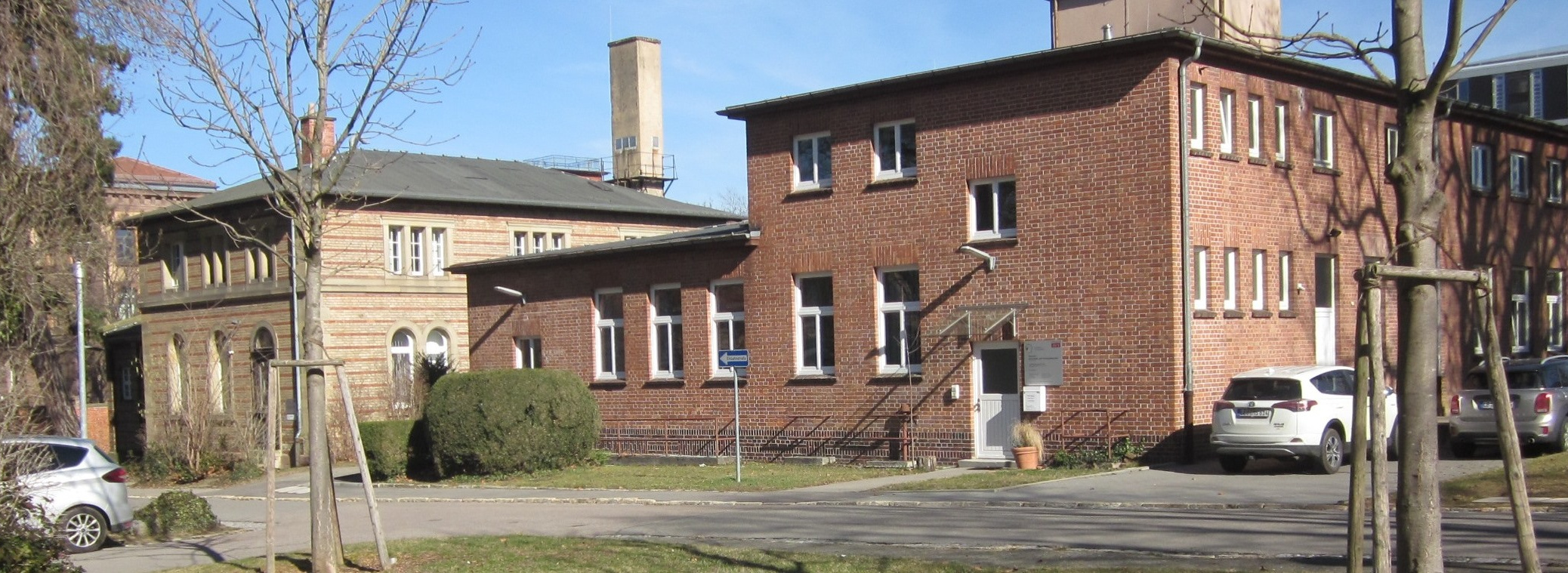
Buildings

Hindenburgstr. 20/2 and 20/3
You will find the sub-department management in the building at Hindenburgstr. 20/3 (on the right), as well as branch offices 551 and 552, while branch office 553 is located in the building at Hindenburgstr. 20/2 (on the left).

Branch offices
Tasks
The sub-department's main tasks lie in the organisation and practical implementation of food and consumer goods monitoring including meat and poultry meat hygiene legislation, the prevention and control of animal diseases, as well as animal protection in the county of Ludwigsburg. Further tasks lie in drug monitoring for animals used for food production, wine law (administrative enforcement), price indication law (labelling in retail trade) and laws concerning animal by-products (e.g. disposal of carcasses).
As a lower administrative authority, the sub-department performs tasks for the state and is subject to the instructions of the departmental supervisory authority (Regional Authority Stuttgart, Ministry for Rural Affairs and Consumer Protection Baden-Württemberg). Furthermore, the sub-department is responsible for infringements in its own area of responsibility (exception: wine law) as a fine authority.
The staff consists of veterinarians, food inspectors, veterinary hygiene inspectors and administrative experts. Furthermore, bee experts are sought.
The main tasks are:
- Conducting controls in establishments producing, handling and/or placing food on the market, such as restaurants, mass caterers, bakeries and confectioners, slaughterhouses, cutting and processing establishments and direct marketers, food retailers and wholesalers.
- Conducting controls in establishments producing, handling and/or placing consumer products on the market, such as restaurants, mass caterers, bakeries and confectioners, slaughterhouses, cutting and processing establishments and direct marketers, food retailers and wholesalers. Manufacturers of cosmetics, tableware, clothing and packaging materials, i.e. articles which come into direct contact with food or human skin or mucous membrane.
- Sampling of food and consumer goods, sampling during ante- and post-mortem inspection, further Analysis at the Chemical and Veterinary Investigation Offices in the state, e.g. microbiological, chemical.
- Tracking of indications and consumer complaints regarding industrial hygiene or the quality of food.
- Professional consultancy and advice on questions relating to the handling of foodstuffs and consumer goods, in particular on takeovers, new openings and applications for building permits from businesses.
- Carrying out of ante-mortem and post-mortem inspection including further inspections (trichinosis inspection), measurement of pH value, determination of water-binding capacity of meat, inspection for odour and taste deviations, etc.)
- Blocking and re-admission of milk producers in case of microbiological deviations. The Milk Testing Baden-Württemberg e.V..
is currently testing milk.
The monitoring activities are carried out by food inspectors and official veterinarians in the veterinary and consumer protection field.
They are supported by experts from the chemical and veterinary investigation offices (food chemists, veterinarians, wine inspectors and other experts) and in cases of illness by doctors and health supervisors of the health protection department.
If deficiencies in or violations of food law regulations are found during company inspections and trial tests, measures may be ordered, including company closures, and fines and criminal offences may be prosecuted.
The sub-department's field of activity aims at preventing the occurrence and spread of communicable and loss-prone diseases in animal populations and the transmission of diseases from animals to humans. Its tasks include:
- Registration of livestock holdings, geo-referencing
- Monitoring of livestock holdings, in particular with regard to identification and registration of animals
- Monitoring of animal traffic and trade
- Issuance of animal health certificates, which are permanently or temporarily transferred to another country as part of travel
- Coordination and monitoring of animal disease control and health monitoring programmes
Organisation and implementation of control measures in the event of outbreaks or suspicion of outbreaks of notifiable animal diseases
Further links
- Friedrich-Löffler-Institute
- Federal Ministry of Food and Agriculture
- Ministry for Rural Affairs and Consumer Protection
- TSIS Animal Disease Information System
- ProMedMail
- OIE (International Office of Epizootic Diseases)
- Rabies Bulletin Europe (Information on Rabies in Europe)
- Inquiry offices in Baden-Württemberg
Except for a few exceptions (e.g. animal experiments), the sub-department is responsible for implementing animal welfare legislation.
We inspect livestock holdings and take the necessary measures to eliminate any infringements found and to prevent future infringements.
A number of activities involving vertebrate animals are also subject to a permit requirement in order to ensure that animals are kept in a manner that is compatible with animal welfare.
Furthermore, we issue certificates of competence/approvals for the slaughter and transport of animals. As a fines authority, we punish conduct contrary to animal welfare in the event of illegality.
The division is responsible for
1. carrying out inspections in accordance with Article 123 of Regulation (EU) 2019/6 and implementing the Veterinary Medicinal Products Act and the measures in accordance with Sections 58(3), 72, 73(1), 76 and 90 TAMG as part of the monitoring of
a) establishments, facilities or persons that keep animals for the production of foodstuffs
b) commercial animal holdings, in particular establishments, facilities or persons who commercially breed, keep or temporarily care for vertebrate animals that are not used for the production of food for other establishments or persons,
c) persons who keep animals in an animal shelter or similar establishment,
2. the receipt of notifications, mandatory notifications and information in accordance with Regulation (EU) 2019/6 and the Veterinary Medicinal Products Act within their area of responsibility in accordance with number 1 letter a.
The regional council remains responsible for administrative offenses.