




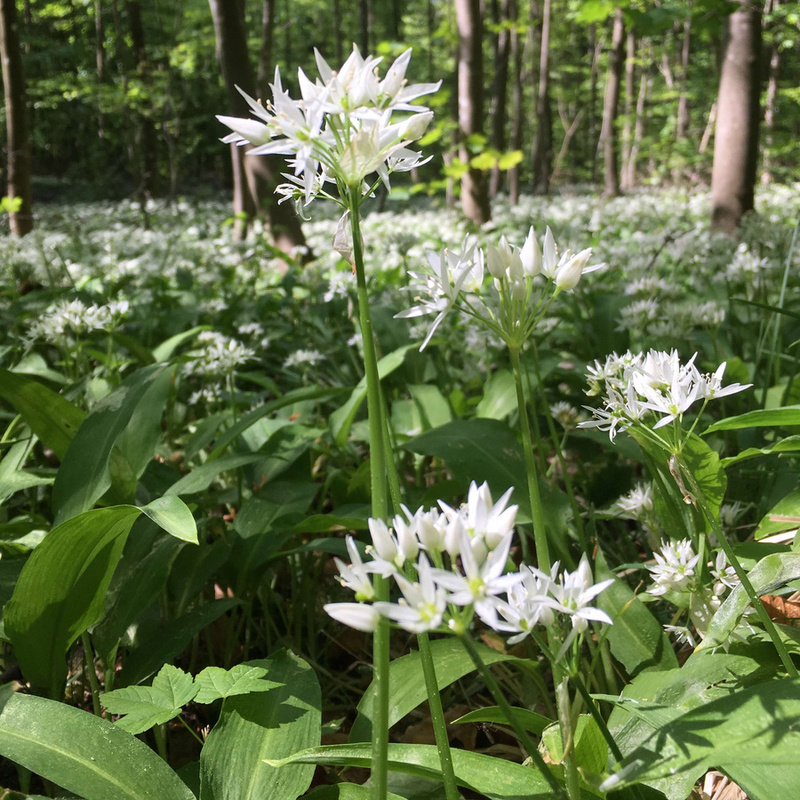
While many spring flowers are protected and may not be picked, collecting wild garlic for personal use is permitted. "According to the State Forest Act, collecting for personal use is permitted in normal household quantities per person," explains Dr. Simon Boden, Head of the Forestry Department at the District Office. Anyone wishing to collect larger quantities or for commercial purposes requires a permit.
Poisonous doppelgangers and safe identification
The plant, whose green leaves grow to around 20 to 30 centimetres long, prefers to grow in mixed deciduous and beech forests, where it often spreads over large areas on the forest floor.Dr. Boden expressly warns of the danger of confusion with lily of the valley and autumn crocus, which can be fatal if eaten. Lily of the valley can cause nausea and vomiting. Eating even a single leaf of autumn crocus can be fatal. Particularly insidious: wild garlic often grows right next to its dangerous doppelgangers.
Important distinguishing features: The underside of wild garlic leaves is dull green and they have a thin stalk. Lilies of the valley, on the other hand, form pairs of leaves on the stem and their undersides are shiny. Dr. Boden advises anyone who is unsure to refrain from collecting wild garlic or to obtain detailed information beforehand.
Mindful behavior in the forest
In addition to their own safety, wild garlic gatherers should also show consideration for nature. This means moving carefully in the forest, not disturbing wild animals and not interfering with other visitors.
If you still want to enjoy wild garlic, you should hurry: The wild garlic season is short and usually begins in April. Depending on the weather, the first tender leaves sprout as early as March. Flowering begins around May and the harvest time comes to an end, as the leaves then lose a lot of their aroma.