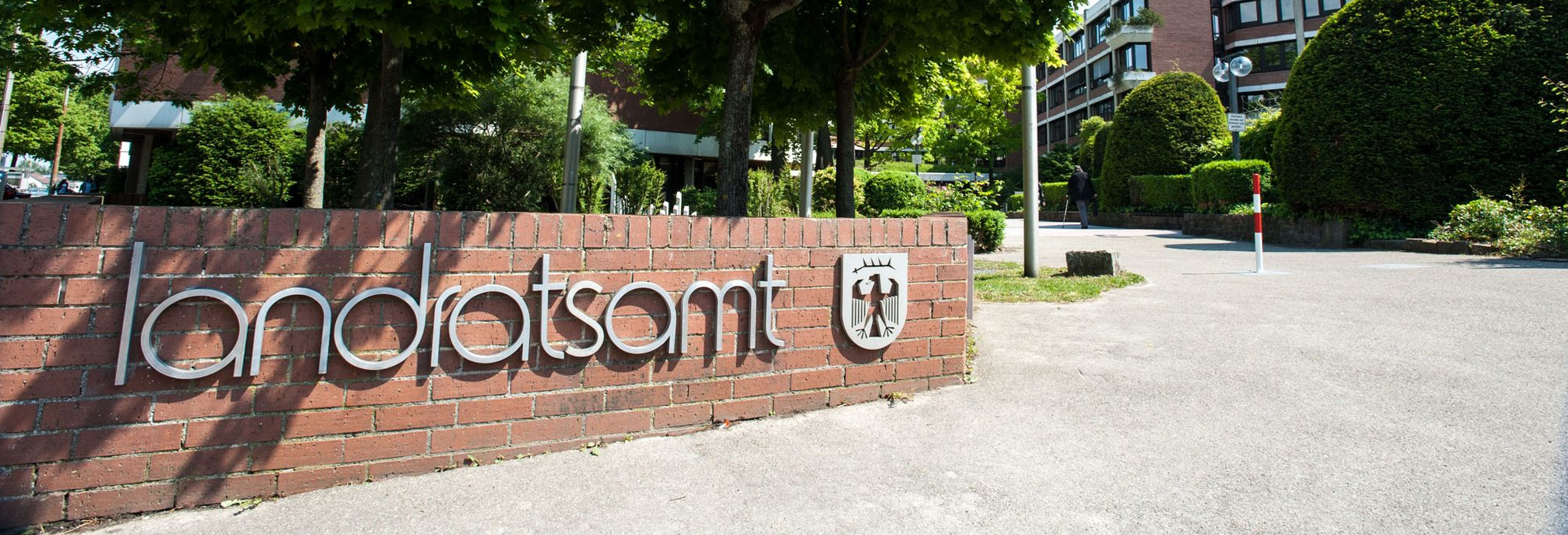




The broad network of Arbeiterwohlfahrt, Caritas, Kreisdiakonieverband, the district association of the German Red Cross and the Ludwigsburg district office is proving to be a fundamental building block for success.
For many refugees, completing the asylum procedure is only a stopover on the way to full integration in our country. Once their residence status has been clarified, further questions arise: Where can I find work and a place to live? How can I make a living for my family? How can I learn German as quickly as possible? And above all, where is my place in society?
This is where the integration managers commissioned by the district of Ludwigsburg come into play. They provide refugees with targeted guidance. Integration managers and refugees work together to set goals and at the same time analyze the extent to which support is still needed. "Our social counseling is not an end in itself, but should enable our clients to find their way independently in our society in the long term. We build trust and signal: 'We are here for you! At the same time, we encourage them to take responsibility for planning their future life path," says District Administrator Dietmar Allgaier.
Progress in the areas of housing, work and language
At the start of 2021, 2469 refugees were being looked after by the integration management team, 970 of whom were minors. Of the adult clients, 24% have a German language level B1 or higher. As some refugees first have to undergo literacy training to learn German, this is a significant step forward for the individual. Language level B1 is an important door opener for entering the job market.
13 percent of adult clients are in employment subject to social insurance contributions. In addition, four percent are doing an apprenticeship, an internship or studying. Integration management has already been completed for 1253 people (as at 01.03.2021). Of these, 780 people were able to sign a tenancy agreement and have private accommodation for the first time.
Julia Fehr, Head of Integration Management at the Ludwigsburg District Office, sees this as a success: "Having their own home is very important for the integration of our clients. Having their own private space removes the feeling of insecurity. This allows people to focus more on challenges such as language acquisition and finding a job. Regular contact with neighbors also helps them to settle into society."
Integration as a long-term process
"We are proud of the progress our clients make," reports Fehr. "Nevertheless, integration is not usually a straightforward process that is completed after one or two years. This makes it all the more important that we, as integration managers, take a close look and assess the needs of each client individually. For example, conflicts in the family, health concerns or everyday failures can initially represent obstacles to integration." The task of the integration manager is to identify these obstacles, work with the refugee to find their own solutions or refer the client to specialist services such as psychological advice centers or job application training. The aim is also to actively participate in the social life of the community in clubs, interest groups or politics. "Anyone who grows up in Germany has a network of relatives, friends, neighbors or acquaintances throughout their lives who know who can help them with questions and problems. Refugees usually lack this network and knowledge completely at the beginning of their stay," says Fehr, describing the situation of refugees.
Broad-based network with independent providers helps refugees
For this reason, the district of Ludwigsburg decided from the outset to set up integration management on a broad basis. Integration managers are employed by the Workers' Welfare Association, Caritas, the District Deaconry Association, the District Association of the German Red Cross and the District Administration Office. These integration managers, who work in 34 towns and municipalities, are in turn directly networked with the local town halls and the local volunteers. "The interaction between independent organizations, town halls, volunteers and the district office is fertile ground for constantly expanding the network for refugees in the district. If the client is then able to move independently within this network on a permanent basis, the integration management team will gradually withdraw from the advice service and take on a new client once it has finished," says Fehr, explaining the long-term concept.
In 2021, the five contractual partners of Integration Management will publish stories about individuals and families in counseling via press release in order to provide a deeper insight into the work of Integration Management and the lives of refugees in the district. Integration management has been financially supported by the state of Baden-Württemberg since 2018. The funding in the district of Ludwigsburg currently runs until the end of 2022.