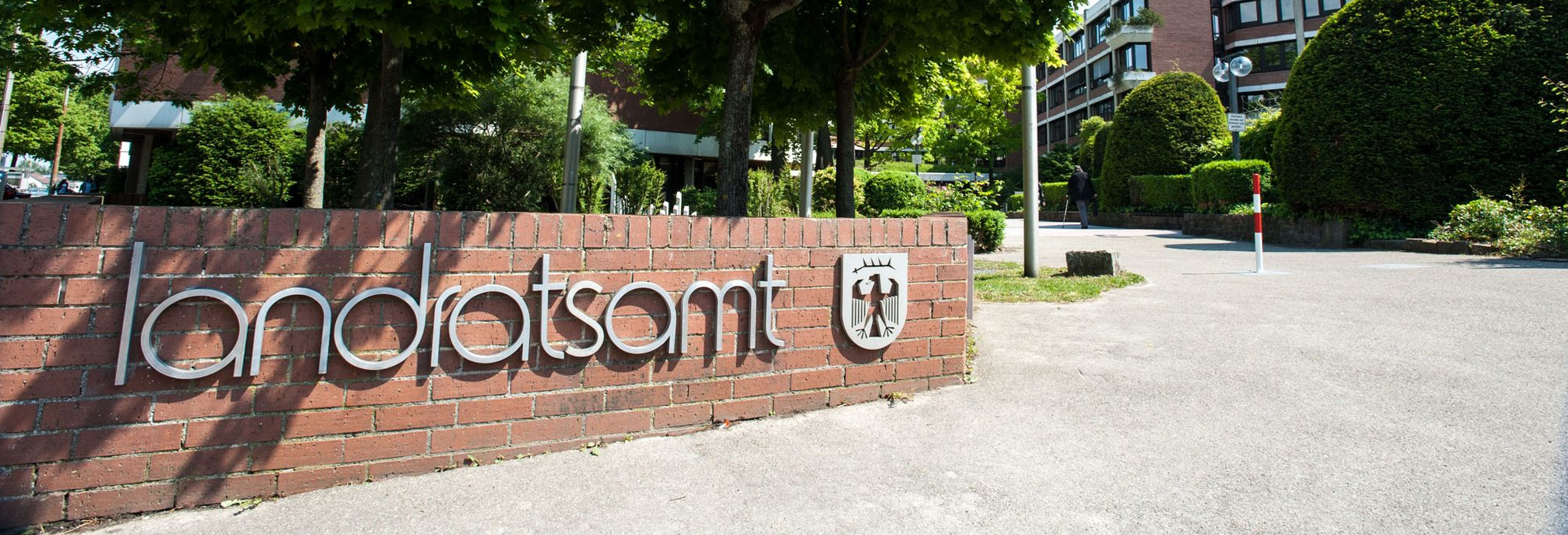




The head of the district administration began by talking about the integrated control center (ILS), which urgently needs a new building. At the same time, continued District Administrator Allgaier, the district had to make its structures more crisis-proof in the face of severe weather events, blackouts and other serious emergencies, despite the tight budget situation. "It is therefore all the more pleasing that the federal government has given us a clear mandate with funds from the special infrastructure fund: Civil protection is the top priority there," said District Administrator Allgaier, announcing that the funds provided from this will be consistently invested in the new construction of the ILS and the disaster control center.
He then made it clear once again that districts and municipalities are confronted with a constantly growing overall deficit, for which higher levels would bear responsibility: "The federal and state governments are constantly adopting new legal requirements that cause additional bureaucratic effort and unfortunately all too often prove to be of little use in practice. At the same time, the principle of connectivity 'He who orders, pays' is repeatedly only insufficiently observed or not observed at all," said District Administrator Allgaier. He is counting on the new state government to take up and address the expectations formulated by the Landkreistag. These include the reorientation of the welfare state, ensuring adequate funding for hospitals and adequate financial resources for the districts.
Improvements since the budget was introduced reduce deficit to 16.5 million euros
"The district of Ludwigsburg has taken a first major step with its budget consolidation, which has significantly reduced the 2026 deficit," said the head of the district administration. Improvements since the budget was introduced, particularly in key allocations and state reimbursements for inclusion-related additional costs, have reduced the deficit from 26.9 million euros to 16.5 million euros. Although a reduction in the deficit has been achieved through a major joint effort, the reserves that have been painstakingly built up over more than ten years are still being eroded.
Comprehensive reform of the welfare state required
The developments at federal and state level are particularly noticeable in the district's social budget, especially with regard to the Federal Participation Act and the associated state framework agreement. The complexity of the Federal Participation Act is evident both in the planning and definition of tailored assistance for those affected and in the subsequent benefit notifications and billing. The law thus further inflates the administrative apparatus. At the same time, the federal and state governments would not provide the full financial resources required to provide the services.
necessary for the provision of services. "The district administration welcomes and supports the desire to deregulate and reorganize the welfare state. In our view, a comprehensive reform is long overdue. Personal services must be provided close to the people and directly on site. At the same time, there is an urgent need to review, streamline and - where appropriate - merge comparable benefit entitlements," said District Administrator Allgaier. Net expenditure in the social sector has risen from 237 million euros in 2022 to around 313 million euros.
The clinics, continued District Administrator Allgaier, continue to face particular burdens. At around 33.8 million euros, the loss compensation is almost 15 million euros lower than in 2024, but there is still a lot of work to be done before the strategy process initiated by the management and its gradual implementation will result in a black zero again and the cross-financing via the district budget can be ended.
Subsidy requirement for public transport increases to 65.8 million euros
Similar to the social sector, the subsidy requirement for public transport, including school transport, has risen sharply in recent years: From under 42 million euros in 2021 to 65.8 million euros in 2026. The cost increases would be particularly evident in new tenders: here, costs have risen by around 4.2 million euros compared to the budget submission. The costs would also continue to rise for pupils who are unable to use public transport. The head of the district administration then turned to the light rail system: "After a hard-won compromise finally found a political majority in 2019, the city of Ludwigsburg now wants to unilaterally end this strategic multi-generational project and reduce it to the reactivation of the old railroad line between Markgröningen and Ludwigsburg. Such an approach not only leads to a considerable loss of trust, but also jeopardizes strategic future projects, especially in times of tight budgets. Yet investing in the future - especially now - would be more important than ever in order to make our district and its towns and municipalities attractive and fit for the future and to leave behind a sustainable infrastructure for future generations." The next steps will now be discussed at the special-purpose association meeting of the Stadtbahn special-purpose association.
111 million euros in LuKIFG funding for the district over the next twelve years
Finally, District Administrator Allgaier reported that the municipal umbrella organizations and the state were able to agree on a package in the Joint Finance Commission. The aforementioned payment for the Federal Participation Act in the current year will be supplemented by around 3.5 million euros in the coming year for the additional costs of inclusion in schools. The state has also approved an additional 550 million euros, meaning that key allocations will be slightly higher than forecast when the budget was introduced. It is also pleasing that the district can expect around 111 million euros from the federal government's special infrastructure fund over the next twelve years.