



comrades from Remseck, Oberstenfeld, Tamm and Ludwigsburg shared their impressions of the situation on the ground. "The personal suffering of many residents is moving. But at the same time, we are satisfied because we provided very useful help," said platoon leader Rainer Rottner, summarizing the experience. The strong individual efforts, in which everyone pushed themselves to their limits, changed many things for the better in the area. The Ludwigsburg flood platoon was deployed in the municipality of Sinzig in the Ahrweiler district together with the Ostalb platoon.
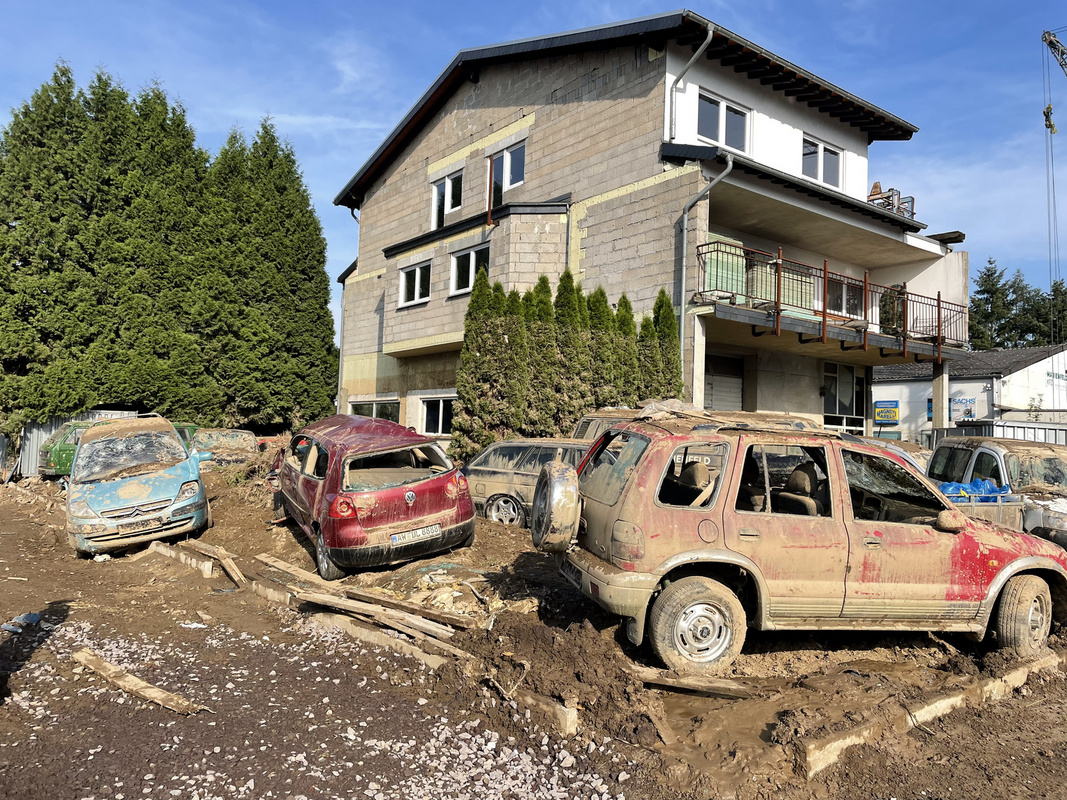
The scene was one of devastation: the bridge on the main road had broken in two. Garbage was piled up to six meters high in the gardens. During the flood, parts of the Ahr were up to 8.5 meters high. "The flow velocity was so enormous that you had to be careful not to be swept away," reports the former section leader of the Remagen fire department. "Some of the buildings are still filled with meters of debris and mud. It's hard to describe the scale if you haven't seen and experienced it for yourself," reports Simon Merkle, also a platoon leader in the Ludwigsburg unit.
The water and electricity supply had collapsed. By organizing professional help, it was possible to give many people a perspective. The supply of fresh, clean drinking water was particularly important. The fire departments provided several drinking water containers. The emergency services successfully dealt with a total of 14 emergency sites, a further three were operated permanently and handed over to follow-up units at the end of the operation. The two platoons pumped out 22,000 liters of oil mixture at these sites and disposed of it properly. 80 cubic meters of oil-contaminated garbage was cleaned up. An elderly resident was very relieved and grateful for the help. The emergency services cleared the mud from the entrance and yard of a visibly exhausted resident. "The joy on your face - it's more rewarding than any words," says Simon Merkle.
Some emotional moments characterized the time. "Many were simply happy that someone was listening," says Merkle. The emergency services took the concerns and experiences of those affected seriously, helped where they could, encouraged them and also took care of the "little things": A car was rescued from a garden in Sinzig that had been parked twelve kilometers upstream and had floated so far into the river. Koi carp were discovered in a completely filthy pond at a fish farm. Using a shuttle service, 3,000 liters of fresh water were transported from the neighbouring municipality of Remagen and the animals were rescued. The many volunteers are also impressive. "Only through the joint, selfless cooperation of many hands could effective help be made possible," summarizes Merkle. And the most important thing: "Everyone arrived home safe and sound."