



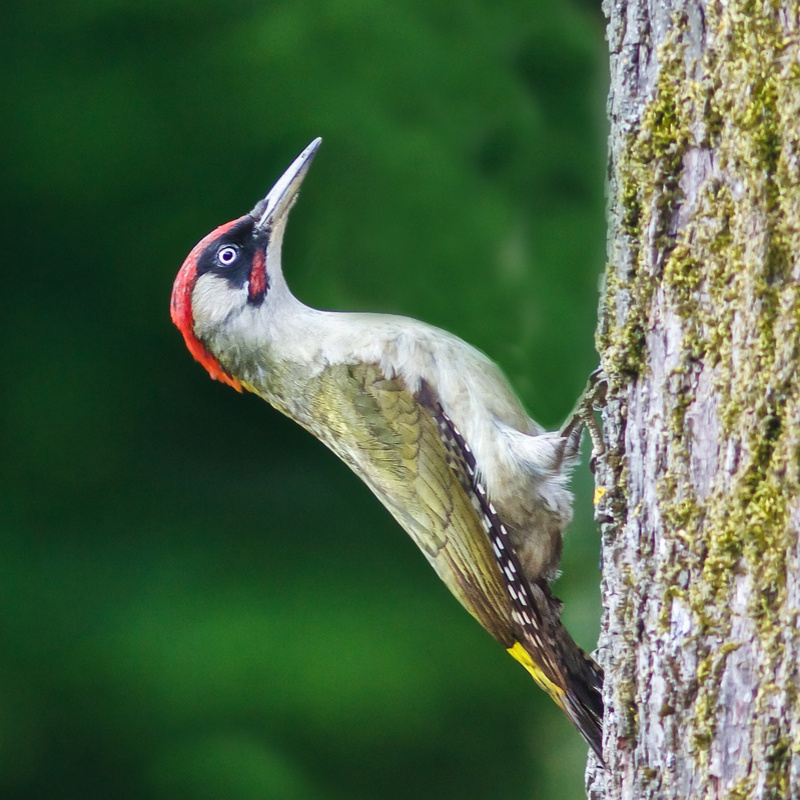
On a walk through the forest, you may notice a group of trees marked with wavy lines. The foresters in the district use these to mark so-called habitat trees, which remain permanently in the forest because they provide shelter for numerous creatures. These include woodpeckers, for example, whose arrival the foresters are delighted to see because they like to eat bark beetles. The feathered master builders also play an important role in creating habitats in the forest.
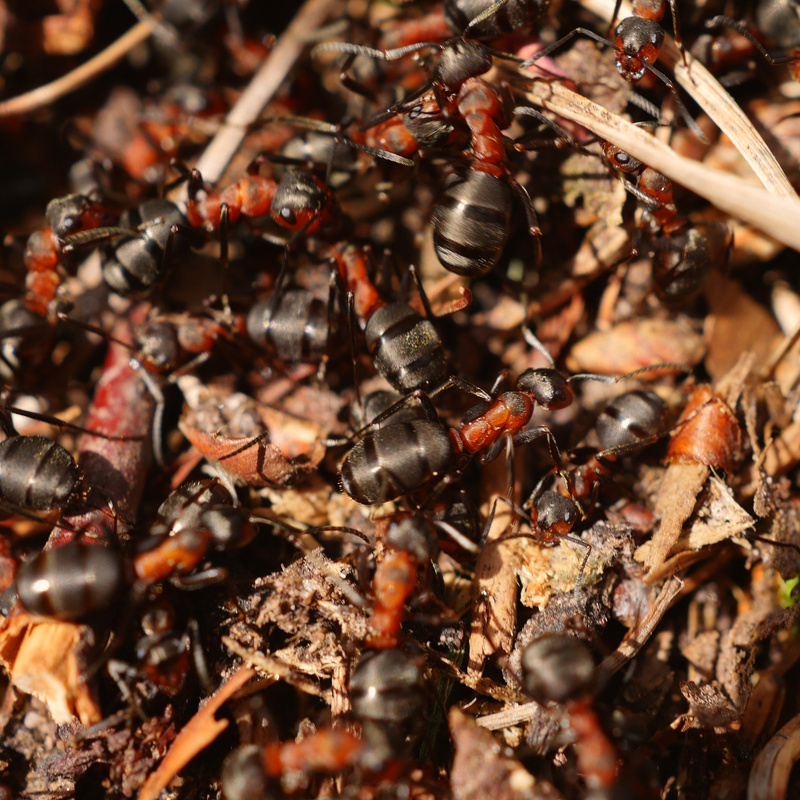
To make itself at home in an old tree, a green woodpecker needs ants nearby as well as a suitable tree. The red wood ant in particular is at the top of its menu. The red wood ant, in turn, feeds on all kinds of insects and spiders and builds its mounds with the help of conifers. Once the green woodpecker has moved on, the stock dove or bats are happy about the cave that has become free in the tree. "This observation shows: Everything in the forest is connected," says Dr. Michael Nill, Head of the Forestry Department at the Ludwigsburg District Office.
Biodiversity, also known as biological diversity, describes the abundance of different life in the forest. Strengthening biodiversity is an important part of foresters' forest management measures. It is important to create and promote different structures. Some animal and plant species feel more comfortable in dense and dark forests, while others need significantly more light and warmth. Small-scale changes between light and dark structures, old and young forests, deciduous and coniferous forests and much more enable countless animal and plant species to find the right niche for them in the forest.
If the forests were left completely to their own devices, they would predominantly develop uniform, old and dark structures - which neither a rare tree species such as the wild service tree nor the red wood ant, both of which are sun worshippers, would like. The diversity of species would decrease over time. Foresters contribute to the preservation of healthy forests and strengthen biodiversity through near-natural and sustainable forest management. For example, if trees are identified in which woodpecker species or other birds have already settled, they are left in the forest as a matter of course. The foresters often select additional trees, which are then marked as a "habitat tree group" with the wavy line mentioned above and thus remain in the forest permanently. It is worth listening carefully when walking through the forest: in early spring you can hear the typical tapping of the woodpecker again - which indicates a healthy forest.
Note on forest walks: There is currently no increased danger potential, most paths are clear again after the storms. The principle of course remains: everyone enters the forest at their own risk!
Fact check: Biodiversity in the forests of the Ludwigsburg district | |
Forest area The least forested district in the state | 12,700 ha (hectares) 18.4 % of the district |
Tree species composition There are hardly any pure stands with few species in the district | 40 % mixed oak forests |
24 % mixed beech forests | |
18 % Mixed deciduous forests | |
14 % Mixed conifer forests | |
4 % pure stands | |
Timber stock Sustainable timber utilization | Stock (forest stand): 290 cubic meters / ha |
Growth: 6.3 cubic meters / ha and year | |
Utilization: 4.6 solid cubic meters / ha and year | |
Protected area landscape rounded figures for the public forest | 3,000 ha water protection forest |
1,300 ha soil protection forest | |
3,000 ha climate protection forest | |
3,000 ha pollution control forest | |
8,500 ha Landscape conservation area | |
300 ha of forest refuges (no timber use) | |
280 ha nature reserve | |
150 ha of protected and protected forest (no timber use or preservation of historical forms of management) | |