



Johanna Klebe and Andreas Fallert from the Ludwigsburg District Landscape Conservation Association (LEV) and Alicia Läpple from the Agriculture Department of the District Office provided expert insights. The contributions were supplemented by practical experience reports from hunting tenant Matthias Grünenwald from Hofen and farmer Andreas Krapf from Erligheim.
The evening clearly showed the area of tension in which many farms operate: falling market revenues for numerous crops are offset by rising production costs, while at the same time social expectations - for example to promote biodiversity - are gaining in importance. At the same time, the type of arable farming can have a major impact on the diversity of habitats and species.
The annual partridge monitoring is currently underway
The focus was on the grey partridge, which is considered "threatened with extinction" in Baden-Württemberg and is the focus of attention as Bird of the Year 2026. The annual partridge monitoring, which is carried out in cooperation between the Lower Hunting Authority and the Wildlife Research Center of the Baden-Württemberg Agricultural Center (LAZBW) with volunteers, is currently underway again. In recent years, more than ten partridge territories have been identified around Erligheim, Kirchheim and Bönnigheim. "The population trend is relatively stable compared to the rest of the district, but at a critically low level," explained LEV Managing Director Andreas Fallert.
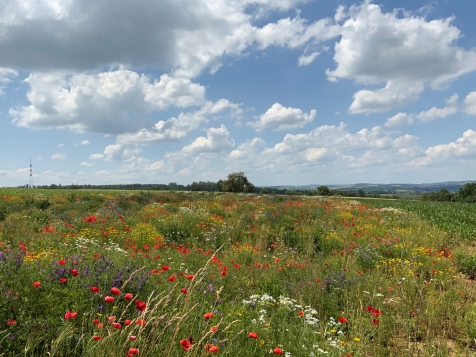
In order to strengthen the population in the long term, the aim is to further expand cooperation between agriculture, hunting and nature conservation. The establishment of perennial fallow land and so-called light fields as well as targeted predator management were named as key measures. Hunters are also concerned about the growing number of predators and neozoa (immigrant animal species) such as raccoons, raccoon dogs and minks, which are putting additional pressure on ground nesting birds.
During the rearing of young from April to August, keep dogs on a lead in fields if possible
The public can also make a contribution: during the sensitive phase of rearing young from April to August, dogs should be kept on a lead in the fields wherever possible to avoid disturbance.
The event provided space for a constructive exchange and made it clear that the protection of partridges can only succeed if we work together.