




The funding focuses on disadvantaged groups of people with particular problems:
"Improving access to employment and opportunities for participation for people who are particularly at risk of poverty and exclusion"
The focus here is primarily on target groups that are often disadvantaged and distant from the labour market, for whom integration into the labour market will only be possible through intermediate steps of social, psychosocial and health stabilization. These include the long-term unemployed with particular barriers to placement, long-term benefit recipients in the SGB II legal system, immigrants and people with a migration background, refugees, people who have experienced flight, single parents, older people, people with disabilities and people with psychosocial problems.
"Preventing early school leaving and improving employability"
The aim here is to reach pupils from year 5 onwards who are at risk of dropping out of school or failing and who cannot (or can no longer) be addressed by other regular school systems. This also includes marginalized, disconnected young people who may be at risk of homelessness and who are not reached by the transition systems at the interface between school and work or by youth vocational assistance.
Project applications must fulfill one of the two objectives mentioned.
In addition to the two specific labor market policy objectives, implementation also takes into account the ESF's cross-cutting objectives of "gender equality", "equal opportunities and non-discrimination", "environmental sustainability" and "transnational cooperation".
Project sponsors can submit their applications in writing to the L-Bank in Karlsruhe by 30.09.2021. The electronic application form ELAN, available on the website https://www.esf-bw.de/esf/esfplus/sm/elan/, can be used for this purpose. Private individuals benefit from their participation in ESF Plus-funded projects and funding programs and therefore cannot submit their own funding application. In the ranking meeting of the local ESF working group of the Ludwigsburg district
at the end of October 2021, the project proposals will be presented by the project sponsors. After the content has been evaluated there and prioritized by a ranking according to state standards, the applications will be forwarded to the L-Bank for approval.
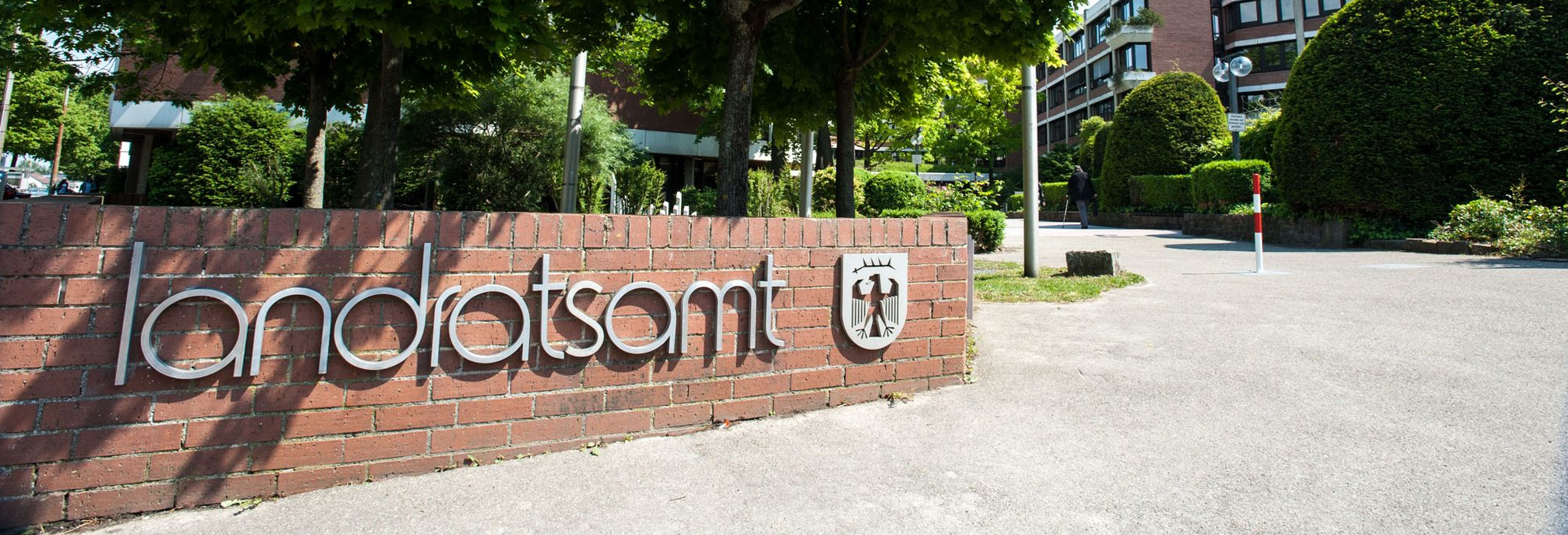
Information on ESF Plus, the call for proposals and the application process can be found on the Ludwigsburg district website at https://www.landkreis-ludwigsburg.de/de/landratsamt-landkreis/kreisverwaltung/dezernat-iv-arbeit-jugend-und-soziales/fb-43-soziales-pflege-und-versorgungsangelegenheiten/. If you have any questions, please contact the ESF office at the Ludwigsburg District Office (Dr. Alexandra Diener, phone 07141 144-42185, e-mail: alexandra.diener[at]landkreis-ludwigsburg.de).
The European Social Fund (ESF) is an important labor market policy instrument of the European Union (EU) for promoting employment in Europe. Since the European Economic Community was founded in 1957, it has improved employment opportunities, supported people through training and qualifications, helped to reduce disadvantages in the labor market and combated poverty and social exclusion. The Baden-Württemberg Ministry for Social Affairs and Integration is supported in its regional funding by the regional ESF working groups, which are based in the city and district authorities.