



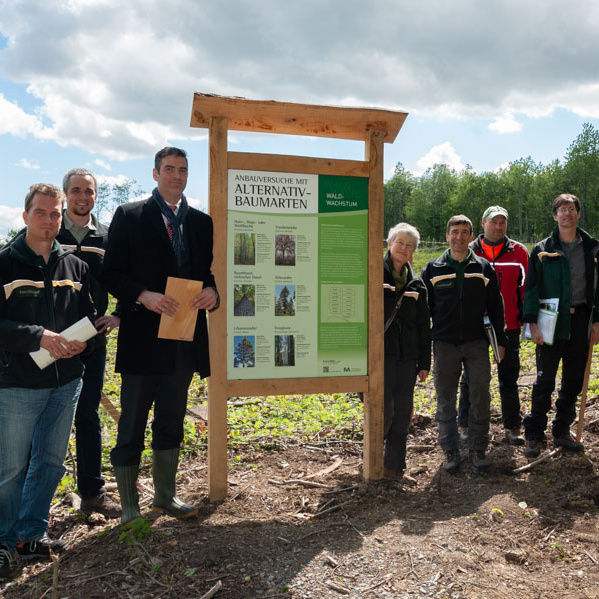
"With a few exceptions, our native tree species are not adapted to prolonged drought and heat. The cedar species and hazel planted here on the trial site come from areas with such conditions, but these tree species are also no strangers to winter and late frosts. They should therefore be able to cope with the challenges of climate change," continued the forestry expert.
The ball was set rolling in the summer of 2018 by a visit from Dr. Muhidin Šeho, a speaker from the Bavarian Office for Forest Seed and Plant Breeding, who, as a proven expert on these tree species, was able to pass on his experience and scientific findings to the Ludwigsburg foresters. The extreme summer was then the reason to press ahead with the topic. The experimental area was set up in collaboration between the Forestry Department and the Forest Research Institute (FVA) in Baden-Württemberg. "The part of the forest in Pulverdinger Holz was ideal for a trial site of this kind: the area is easily accessible and the previous stand was severely damaged by various serious fungal diseases," explains Hartmut Flunkert, the responsible district manager.
The cultivation trial includes Atlas cedar, Lebanon cedar, hazel, Douglas fir, hornbeam and sessile oak. The latter two are considered to be the native tree species that are best adapted to the expected climatic conditions. Foresters have also had centuries of good experience with the Douglas fir, which originates from North America. A direct comparison of the tree species will show whether cedar and hazel can actually meet the high expectations placed on them by foresters. The area is being scientifically monitored by the FVA so that reliable data will be available over time.
"We don't want to replace the native tree species, we want to preserve the forest! This goal requires that a healthy mixture of native deciduous trees and alternative tree species together form the forest of tomorrow on extreme sites," says the deputy head of the Forestry Department.