




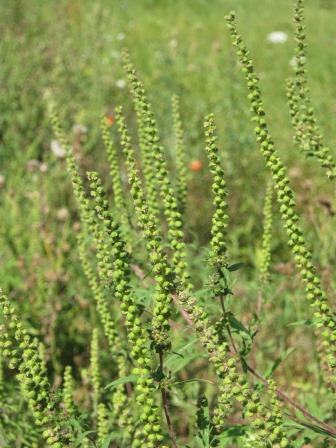
However, ragweed, like other neophytes, should not be thrown into the organic waste garbage can or taken to chopping areas or compost heaps. This is where it finds excellent conditions for its propagation. It is better to put the herb in a plastic bag and throw it in the residual waste garbage can. The ragweed plant is particularly common near bird feeders, as its seeds are often contained in the food. The layman can best recognize the late-flowering herb between July and October by its conspicuous inflorescence.
Ragweed occurrences can be reported on the homepage of the Baden-Württemberg State Institute for the Environment (LUBW) under the following link:
https://www.lubw.baden-wuerttemberg.de/medienuebergreifende-umweltbeobachtung/bestaende-melden).
If you would like to find out more about ragweed, you can find a flyer on the homepage of the Federal Environment Agency at the following link:
https://www.umweltbundesamt.de/themen/ambrosia-gefaehrliches-gewaechs-fuer-allergiker