




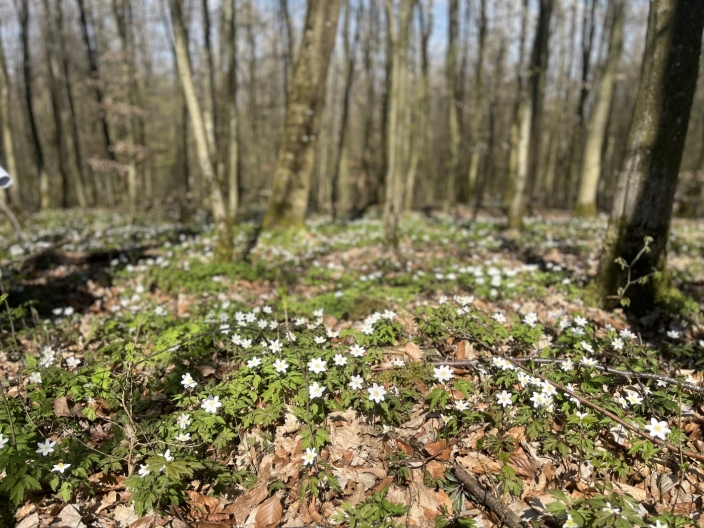
Nature awakens step by step after winter
Wood anemones, wood primroses, bluestem, wood violets or the fragrant leather flower: Anyone strolling through the woods at the moment can observe how nature is gradually reawakening after the winter. "Many of these spring-flowering plants are geophytes. They have underground storage organs and use the sunlight while the treetops are still bare," explains Dr. Simon Boden, Head of the Forestry Department at the Ludwigsburg District Office.
Many species are protected
As tempting as it is to pick the harbingers of spring, many species are protected. Wood anemones, primroses and leatherworts, for example, are not allowed to be collected.
Commercial use requires a permit
The State Forest Act only permits the picking of non-protected plants up to the quantity of a hand bouquet for personal use. Commercial use is generally subject to authorization. The most sustainable way is to enjoy the flowers where they grow, as the memory of the nature experience lasts much longer than a bouquet in a vase.
Collecting wild garlic: allowed, but caution is advised
Collecting wild garlic is very popular. "Collecting as a hand bouquet is permitted, but caution is advised," explains Boden. Wild garlic can easily be confused with poisonous plants such as lily of the valley or autumn crocus. Only those who are sure should harvest wild garlic, as eating lily of the valley and autumn crocus can be life-threatening. Important distinguishing features: The underside of wild garlic leaves is dull green and they have a thin stalk with which each leaf grows individually from the ground. Lilies of the valley, on the other hand, form pairs of leaves on the stem and their undersides are shiny. Like the lily of the valley, the bright green, shiny leaves of the autumn crocus grow sessile from a rosette.
Forest as a recreational area - consideration protects nature and animals
The forests in the district of Ludwigsburg fulfill a variety of functions: They are habitats for numerous animal and plant species, climate protectors and important recreational areas at the same time. Around three quarters of the forest areas in the district are designated as recreational forests.
"The forest has a positive effect on health and well-being," says Boden. "At the same time, this time of year is sensitive for many wild animals - breeding, setting and rearing season have begun." To avoid disturbance, the forestry department asks that you stay on the paths and show consideration for others.