




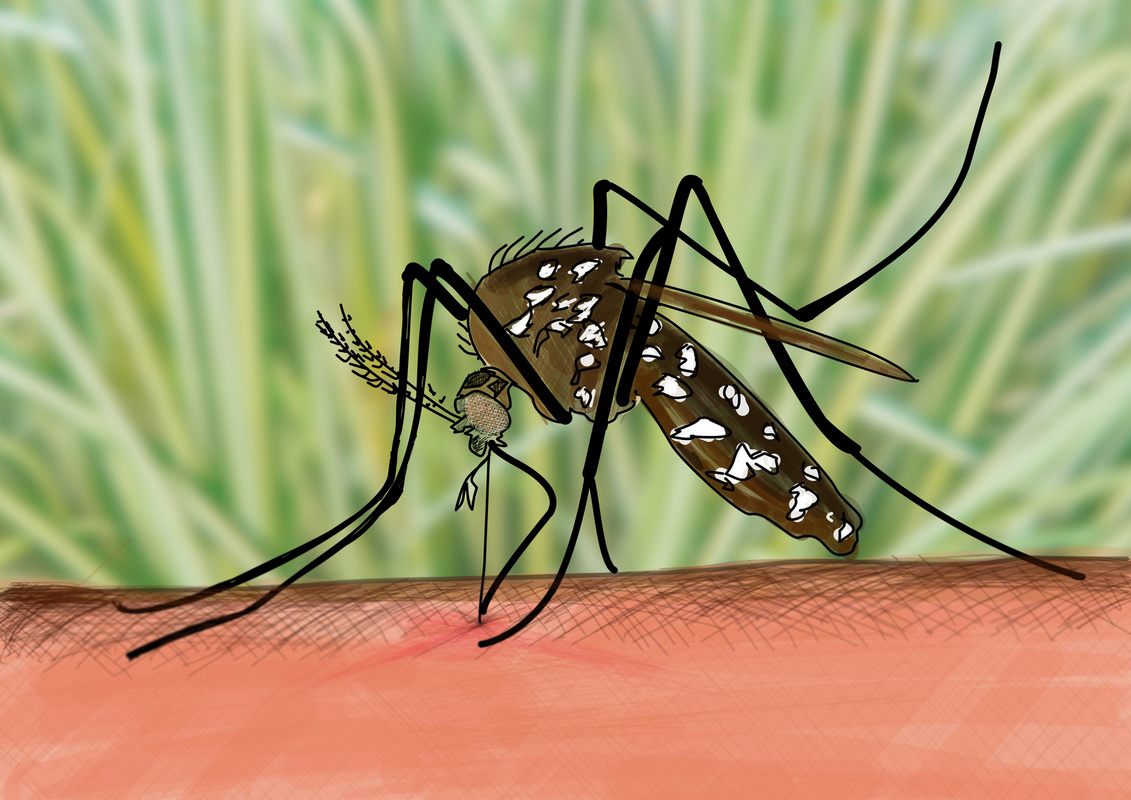
Fall is the right time to take action against the Asian tiger mosquito. Adult tiger mosquitoes die off as temperatures drop. However, their winter-hardy eggs survive the cold season. They cling to the inner edges of containers and other water sources and can produce new tiger mosquitoes the following spring.
The Asian tiger mosquito prefers to breed close to people. Preferred breeding sites can be found around the house, such as in the garden and on the balcony—for example, in watering cans, flowerpot saucers, rain barrels, wading pools, or bird baths.
The more thoroughly you clean now, the fewer tiger mosquitoes there will be next year
To achieve the greatest impact, the Department of Public Health is calling on all residents to take fall measures against the Asian tiger mosquito. Only if as many properties as possible participate—especially in affected areas—can the number of tiger mosquitoes be effectively reduced next spring.
Check for potential breeding sites
First, identify water sources around the house and empty them if possible. Then thoroughly scrub the inner surfaces to dislodge any attached eggs. To be on the safe side, it is recommended to rinse with hot water (60–70°C). This should only be done if it does not damage the item. Afterward, allow the used water to seep away, e.g., onto the ground or the patio. All potential breeding sites should be checked and cleaned in this manner. Even the smallest pools of water can serve as breeding sites for tiger mosquitoes.
More information on potential breeding sites and tiger mosquitoes is available at: https://www.kabsev.de/bekaempfung/tigermueckenbekaempfung/
Those interested can find a fact sheet on tiger mosquitoes in the fall at https://www.landkreis-ludwigsburg.de/gesundheit-veterinaerwesen/gesundheit/gesundheitsschutz/umwelthygiene/
Making Breeding Sites Winter-Ready and Mosquito-Proof
Breeding sites that are not removed during the winter should be made mosquito-proof immediately after cleaning for the coming season, for example by covering them with a suitable net. Hollow tubes, such as those in umbrella stands or fence posts, can be sealed using appropriate caps, adhesive film, or a cut-open plastic bottle.
Questions and suspected cases (photos) can be sent by email to gesundheitsschutz[at]landkreis-ludwigsburg.de.