



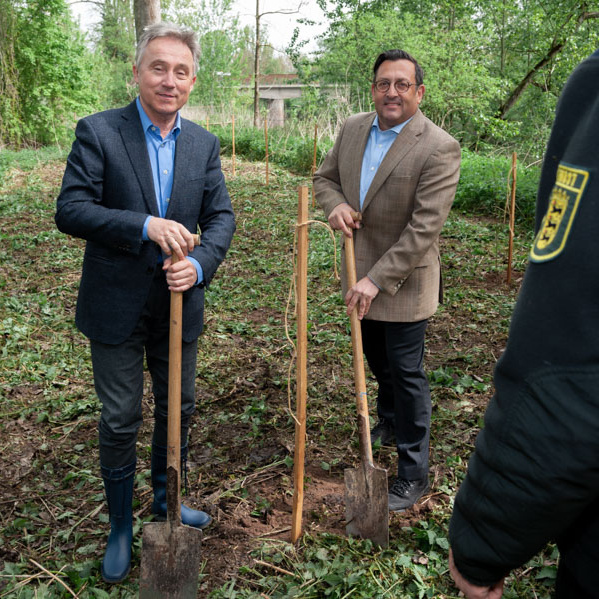
"As District Administrator of the least wooded district in Baden-Württemberg, it is particularly important to me to draw attention to rare tree species such as the elm," said District Administrator Dr. Haas at the planting event on Monday (29 April). The wych elm (Ulmus laevis) was named Tree of the Year this year, and to mark Arbor Day on April 25, District Administrator Haas and First Mayor Klaus Reitze took to the spades on the banks of the En river in Vaihingen. "We want to set an example for biodiversity," emphasized District Administrator Haas, "and the fluttering elm is also an unusual and surprising tree in many respects."
On the one hand, the wych elm is unusual because it is the only native tree species that forms board roots - otherwise only found in tropical rainforest trees. The fluttering elm is also surprisingly valuable from an ecological point of view. It provides a habitat for rare animal species - a rare butterfly species, the elm-tip butterfly, is even named after it. Another unusual feature of the elm tree is its dancing fruit: Its namesake are the long-stemmed flowers and fruits that flutter and dance in the wind. The fluttering elm is a very rare tree species, its home is the floodplain forest. In times of straightened rivers and drained wetlands, the fluttering elm has found fewer and fewer opportunities to spread.